Pengaruh Perbedaan Padat Tebar Ikan Kakap Putih (Lates calcarifer) terhadap Performa Pertumbuhan di PT. Suri Tani Pemuka, Banyuwangi, Jawa Timur
DOI:
https://doi.org/10.36706/jari.v14i1.81Keywords:
FCR, Growth, Lates calcarifer, SGR, SRAbstract
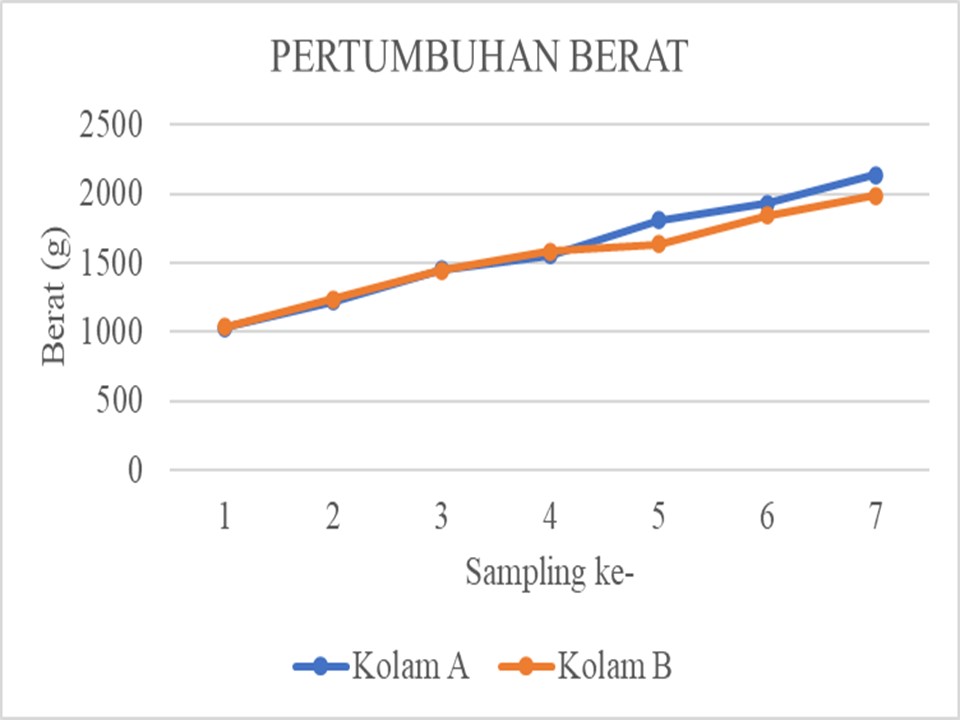
White snapper is a leading fishery commodity with high demand in the export market. This study was conducted to analyze the effect of different stocking densities on the growth performance of white snapper at PT. Suri Tani Pemuka, Banyuwangi, East Java. Different stocking densities were used, namely 23,500 fish/m3 in pond A and 24,500 fish/m3 in pond B. The feed provided was artificial feed measuring 15 and 20 mm by ad-satiation with a frequency of feeding twice a day at 08:00 and 15:00. The results showed that the stocking density of 24,500 fish/m³ in pond B provided the best results with higher feed efficiency and optimal SR. This indicates that increasing the stocking density to a certain limit can stimulate fish feeding activity, increase feed efficiency, and maintain a balance in population growth in an intensive rearing system.